
The places behind your stay
Two shorelines.
Generations of stories.
The history of Garden City Beach & Murrells Inlet.
One faces the Atlantic. The other gathers around the creeks.
Garden City.
Built around the ocean.
The pier has long been a gathering place: a spot to fish, meet friends, and make a summer tradition.
The Pier at Garden City traces its beginnings to the Kingfisher Pier in the 1940s, when fishing cottages and summer homes helped shape the community. Its story includes repeated destruction and rebuilding after coastal storms, including Hurricane Hazel in 1954 and Hurricane Hugo in 1989.
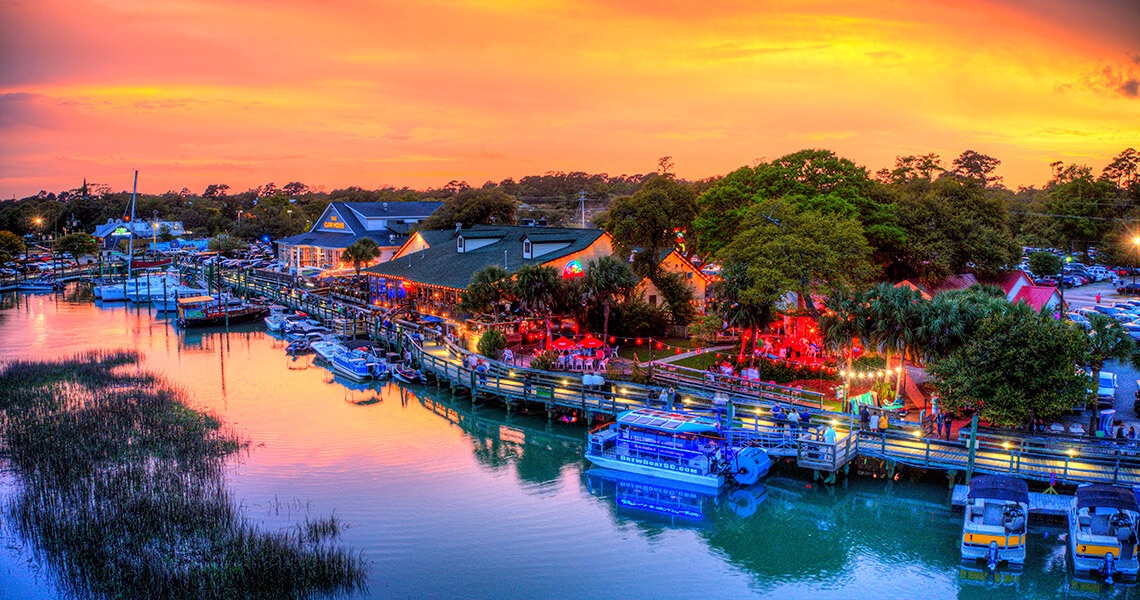
The Pier at Garden City · its own history ↗Today, beach houses, condominium rentals, the pavilion arcade, and the pier still give Garden City Beach its family-vacation character. The beach and the inlet sit close together, offering two different ways to spend a day near the water.
Visit Myrtle Beach · Garden City Beach ↗The storm that
changed the shore.
Hurricane Hugo left a lasting mark on both communities.
The National Weather Service records severe storm-surge damage in Garden City, including the loss of the pier, damaged beachfront buildings, and sand covering roads well inland. Murrells Inlet also suffered major waterfront damage. Rebuilding became another chapter in a coastal history shaped by both the beauty and power of the ocean.
National Weather Service · Hurricane Hugo ↗Murrells Inlet.
A working waterfront.
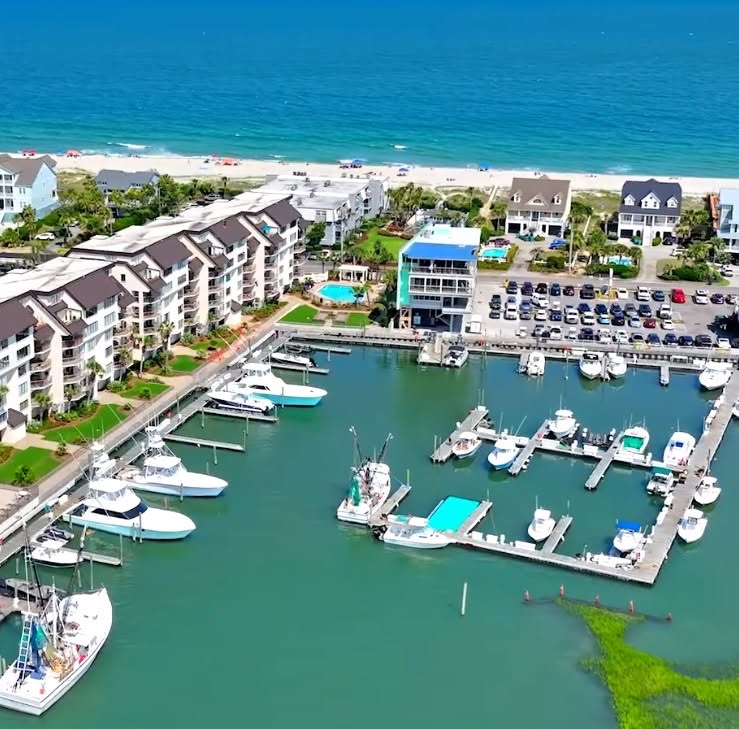
Before the restaurant patios and sunset cruises, the creeks were places of work and sustenance.
The South Carolina Encyclopedia links an early name, Morrall’s Inlet, to John Morrall, who purchased land here in 1731. Rice plantations spread along the Waccamaw Neck in the nineteenth century. Enslaved people worked the surrounding waters as well as the plantations, gathering seafood for the households that enslaved them.
By the late 1800s, inland families were establishing summer homes along the creekfront. Local oyster roasts and fish dinners helped turn a fishing and farming community into a destination for visitors. Charter fishing grew alongside the food traditions; after World War II, easier travel and nearby Myrtle Beach brought more customers to local restaurants.
South Carolina Encyclopedia · Murrells Inlet ↗Those layers of history still sit alongside one another: boats at the docks, tidal creeks behind the restaurants, and families returning for another meal by the marsh.
Atalaya and
the Huntingtons.
A winter home became one of the area’s most distinctive historic places.
Atalaya was the winter home of Archer and Anna Hyatt Huntington. Archer’s interest in Spanish culture influenced its Moorish-inspired architecture. Now a National Historic Landmark at Huntington Beach State Park, the building offers another perspective on the coast’s history—one centered on art, architecture, and preservation.
The state park land was leased from the Brookgreen Trustees in 1960. Visitors can explore the park and learn about the Huntingtons through its historic interpretation. Check the park’s current information before visiting Atalaya.
South Carolina State Parks · history & interpretation ↗See the stories for yourself
History within an easy outing.
The pier
Stand where generations have come to fish and watch the Atlantic.
Visit the pier ↗MURRELLS INLETThe MarshWalk
Follow the waterfront and see the creeks behind the seafood traditions.
Explore the MarshWalk ↗HUNTINGTON BEACHAtalaya
Explore the Huntingtons’ winter home and the surrounding state park.
Plan a park visit ↗